
Larry Sultan spent most of his career photographing the struggle over who controls a picture. Swimmers is the one time he lost on purpose, and the rest of his work makes more sense once you see why.
Start with what came before. In 1977 he and Mike Mandel made Evidence, fifty-nine photographs pulled from the files of police departments, NASA and engineering labs: a wrecked rocket in the desert, men wading through foam, a man with wires attached to his body. They stripped the captions off. Without the institution telling you what you are looking at, the pictures turn strange and faintly menacing. It is a clever book, and a cold one. Its subject is the power of whoever holds the file.

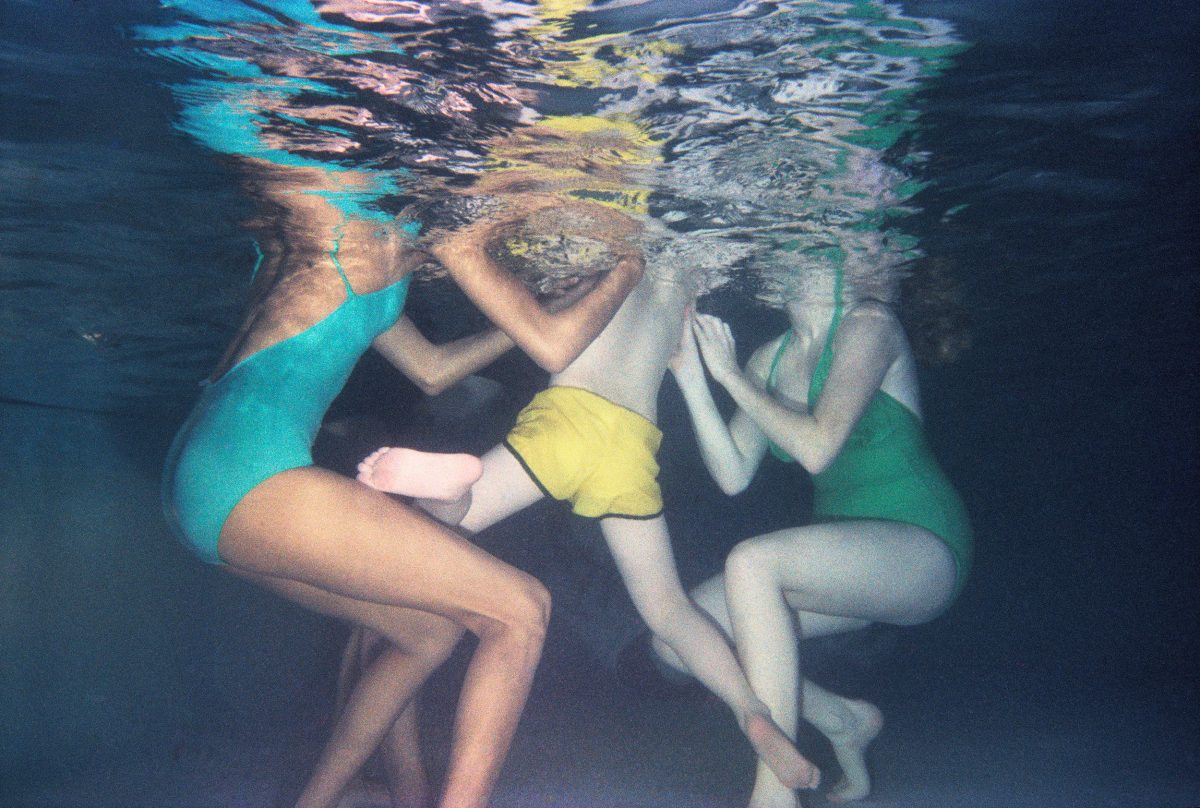
Swimmers is the opposite in every way. Around 1978 he took an underwater camera into public pools in the Bay Area and photographed people learning to swim. "Water is the only bit of nature I know that we can't control," he told students in 1980. He could not arrange the pictures, could not talk to the people in them, could barely see. He held his breath and waited. "Making art is about giving up control," he said that same year, and the photographs show what that means in practice. Almost nobody's head is in the frame, because the camera rarely breaks the surface. What you get are bodies doing the one thing they cannot fake: trying not to sink. A girl floats with her eyes and mouth wide open. A man sits on the floor of the pool holding his breath while three boys pass over him. There is no performance anywhere. Everyone is too busy.
He said these pictures came at a time when he felt his artistic life had been cut off from his body. In the pools he got it back, and he learned something he would use for the rest of his career: people are most themselves when they have forgotten how they look.
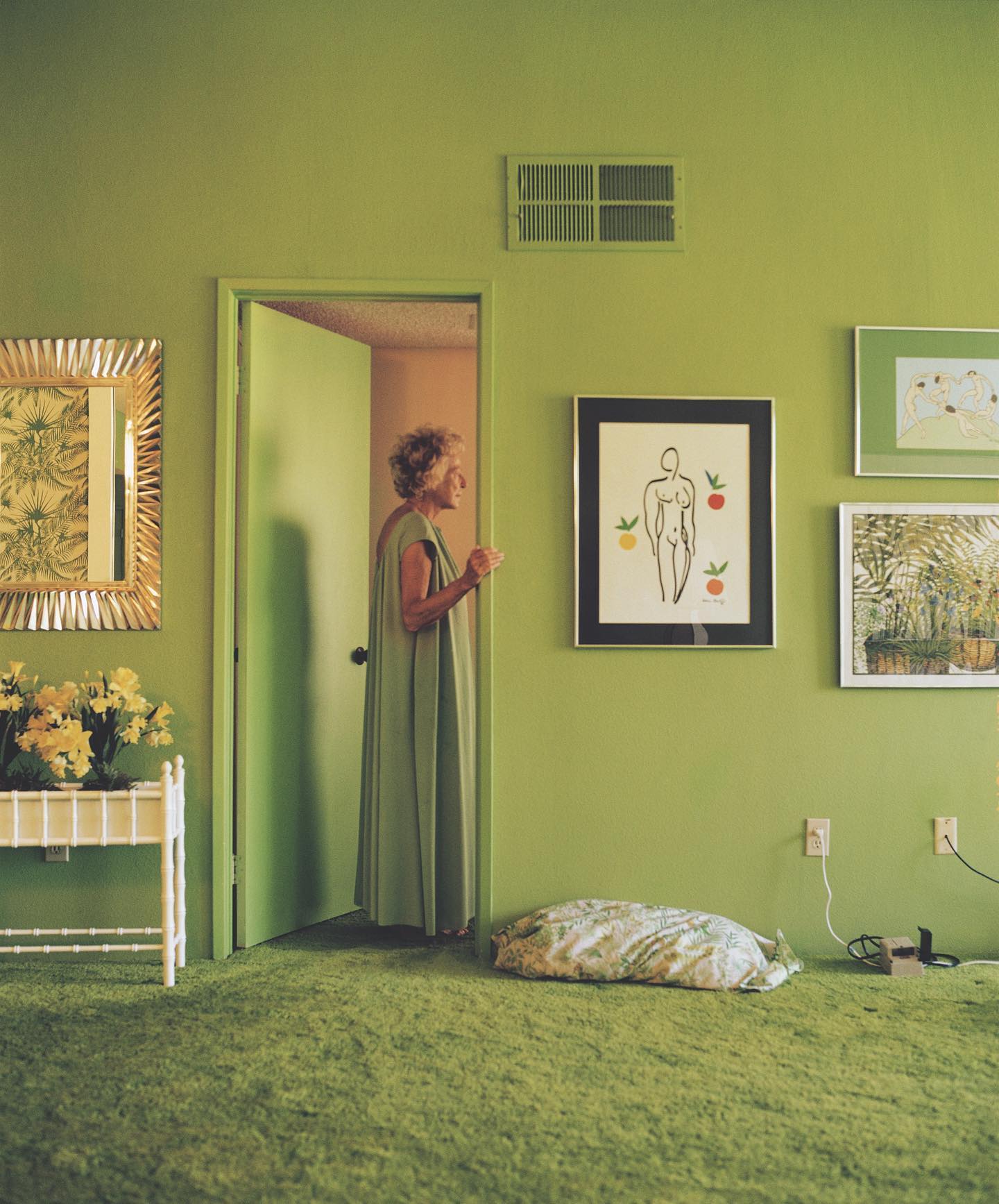
He used it on his parents. Pictures from Home, the work he is best known for, is almost ten years of photographing Irving and Jean Sultan in their house in the San Fernando Valley, and it is a slow negotiation over control. "I wanted to puncture this mythology of the family," he said. The best pictures are the ones where his parents stop managing their image: his father sitting on the edge of a bed, impatient, between takes of a scene his son had asked him to play. That is the lesson of the pools, brought home.

Swimmers stayed in boxes for decades, and most of it was never printed in his lifetime. It was not the work that made his name. Seen now, it looks like the moment he worked out what he was looking for. Everything after it is a man waiting, camera ready, for people to forget he is there.
Swimmers is available at Parallel Editions.